How to Photograph Bubble-Net Feeding Whales
In this post, we’re going to walk through what bubble-net feeding is, different ways you can be ready for the moment, and how you can get beautiful photos of this unique and rare behavior. Let’s get started!
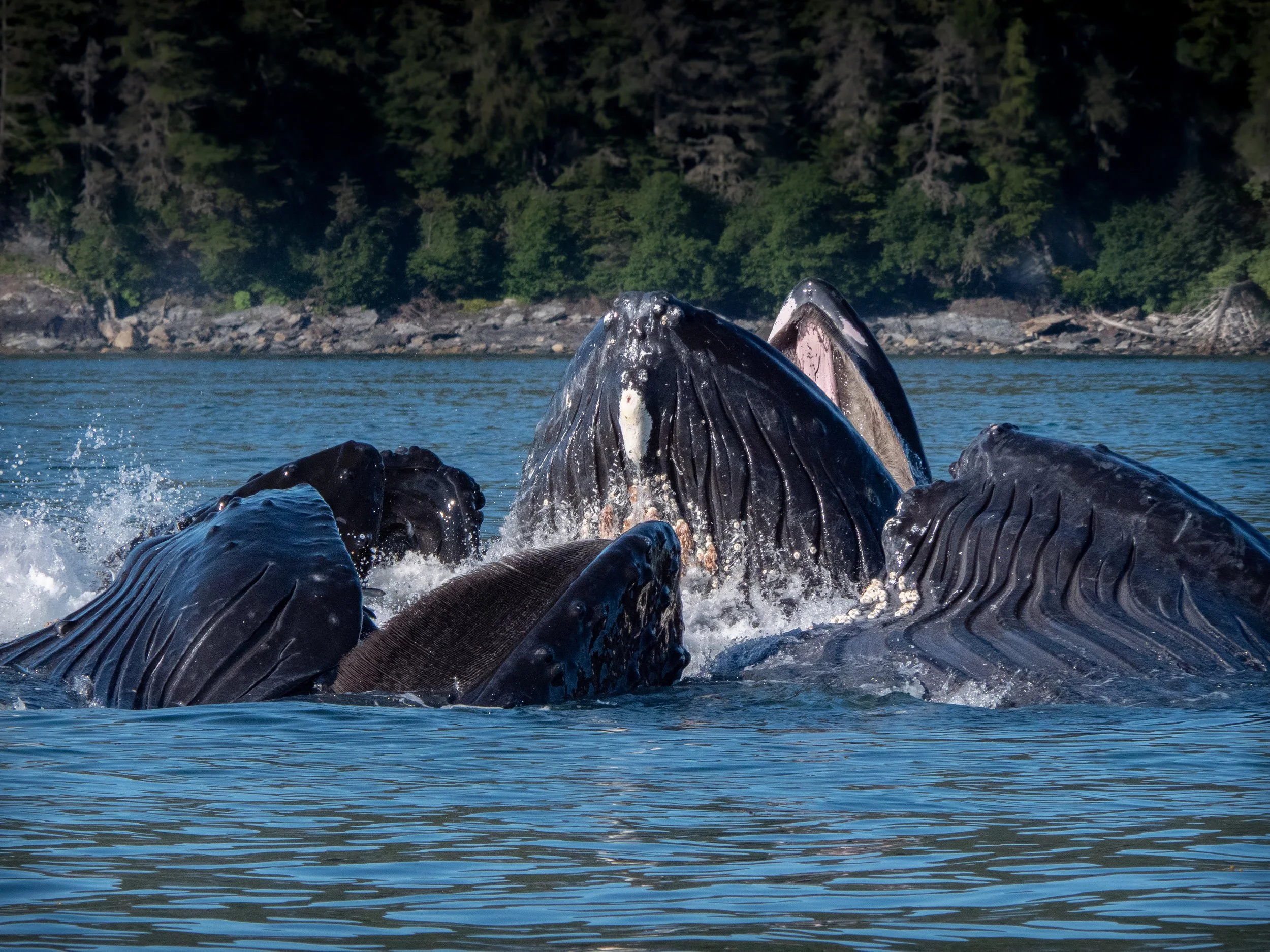
A few humpback whales engulfing a large group of herring in Juneau, Alaska
First, what is bubble-net feeding?
Bubble-net feeding is a learned, group-feeding behavior that only some humpback whales practice. In short, unrelated whales meet up and work together to trap large groups of fish and get them to the surface. Then all together, the whales shoot out of the water head first and engulf the fish. What is so interesting is that this behavior is highly choreographed. Each whale has a specific purpose - one will create bubbles to trap the fish, another will make a sound to scare them to to the surface, and others will circle around the group. If you watch the same group of whales bubble-net feed repeatedly, you’ll find that they all shoot out of water in the same formation every time. It is astounding!
How often does it happen?
Not that often. It is estimated that somewhere around 10% of humpbacks know how to bubble-net feed. In 2026 in Juneau, Alaska, there were a couple weeks in August where whales were intermittently bubble-net feeding within the area whale watching tours visit, which is fairly typical for a given year. As a visitor, you’ve got to get pretty lucky to witness it!
So how do you photograph this behavior?
Photographing bubble-net feeding is all about timing. One thing to keep in mind is that once a group of whales starts to feed in this way, they often continue for quite a long time, which gives you a few tries to get the shot. If you are lucky enough to witness bubble-net feeding, there are a few things you can look for to increase your odds of getting a great photo:
My favorite: If there are birds around, they may give away the location of where the whales will appear. A few seconds before the whales pop up, tiny fish are going to appear at the surface of the water. Sometimes group of birds will be circling overhead looking for this, and they will all converge on the location of the fish a few seconds before the whales appear. This gives you time to get your camera pointed the right way and get the scene in focus.
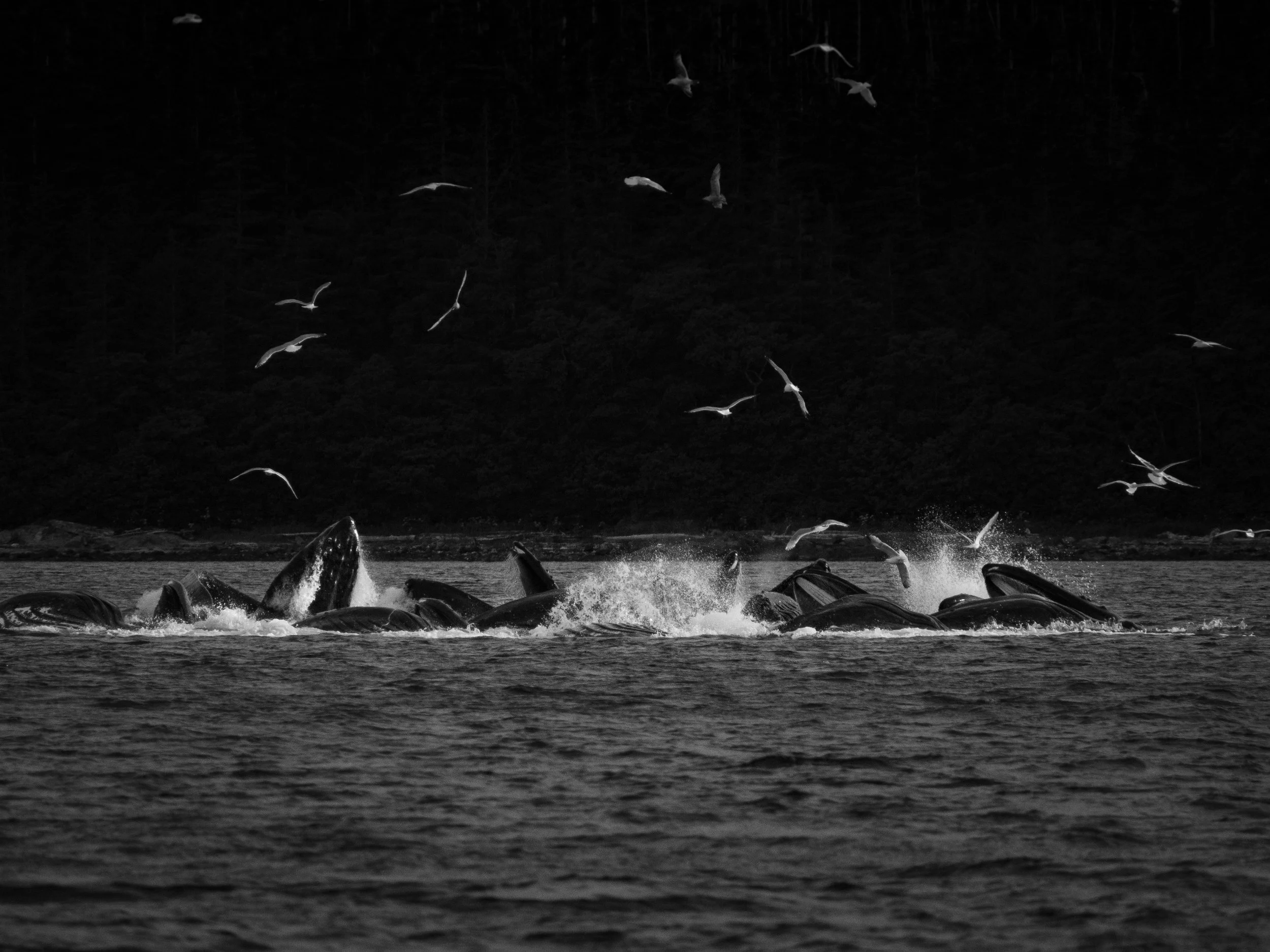
In this photo, the birds are going after the fish along with the whales. Just moments before the whales surfaced, the birds flew down to the water, revealing the location of the whales. The birds helped me make this a successful photo!
If there are not birds around: Keep an eye out for jumping fish. When the whales scare the fish to the surface, some of the fish will jump out of the water just before the whales engulf them. If you see jumping fish, you may have 1-2 seconds before the group of whales appears.
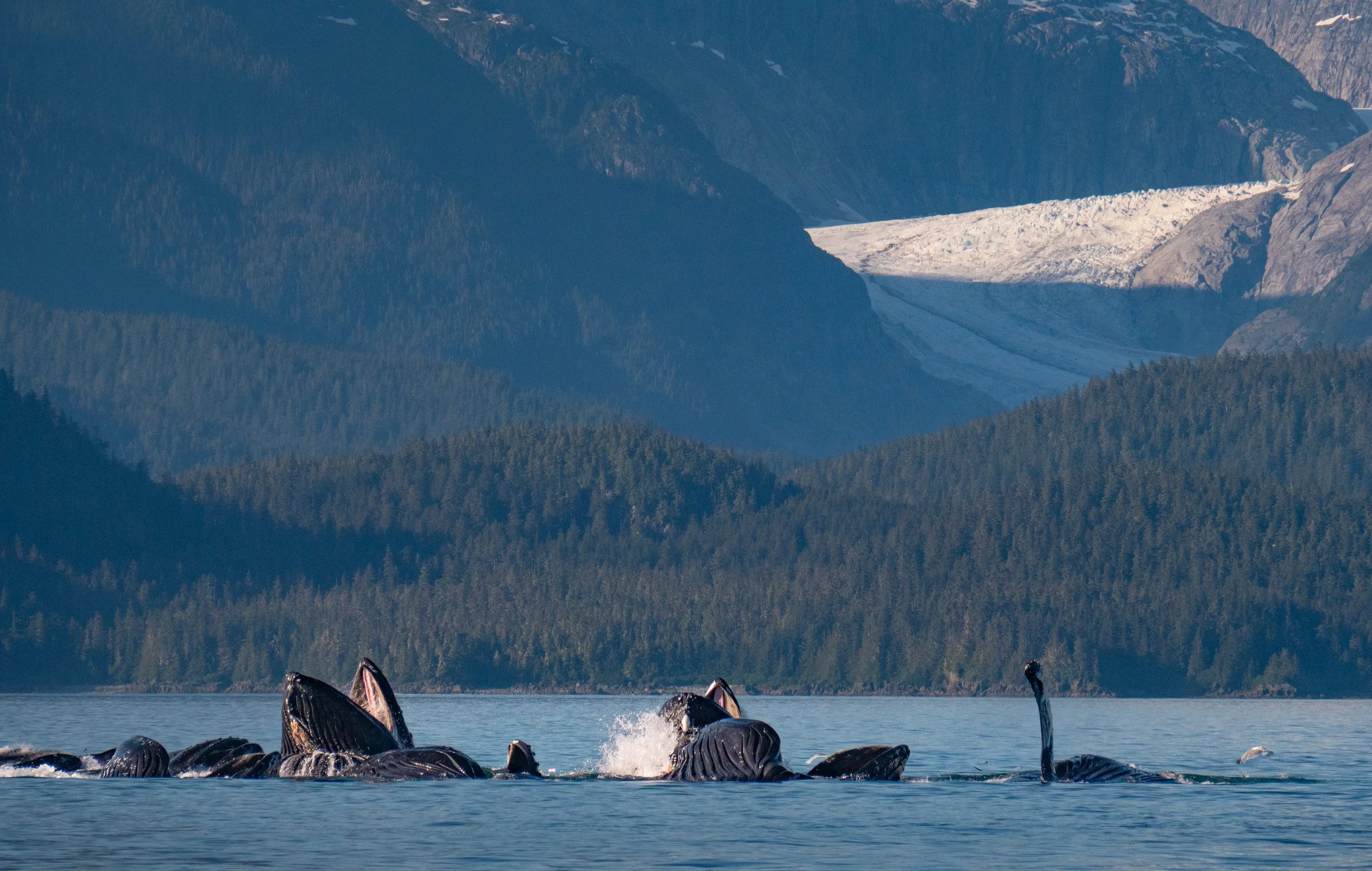
Right before I took this photo, I was able to spot some fish jumping out of the water, which gave me just enough time to frame the shot and get everything in focus. Our boat captain did a wonderful job of lining us up with a glacier. The stars really aligned for this unforgettable moment!
Hydrophones: Depending on how close you are to the group of whales, your boat captain may put a hydrophone (underwater microphone) into the water to see if you can hear the whales. One whale in the group makes a loud noise to scare the fish to the surface right before the rest of the whales surface. When you hear the noise, the whales will usually appear within a few seconds.
Sometimes you won’t get any indicators from other animals. In these situations, I look in the general direction of where the whales last surfaced, have my camera pointed that way with a fast shutter speed and continuous shooting turned on, and wait. I usually keep a fairly wide field of view, so I have a greater chance of the whales appearing in-frame. If I’m with a group, I’ll make sure one person is taking a video instead of photos, as videos are easier to capture.
I took a slow-motion video showing a group of whales bubble-net feeding. Notice the sequence of events that occurs.
As you can see in the video, both the fish and the birds gave me a general sense of where the whales were going to appear. I was zoomed in to 400mm and was initially looking a bit to the right of the action, so I started panning to the left as the whales appeared. Keep in mind this video is slowed down by 6x, so in real time this sequence occurred fairly quickly.
I hope this post helped you learn a little more about this unique behavior and how you can set yourself up for success. Bubble-net feeding is truly a transformative behavior to witness.
Want to learn more before your Alaska trip?
Click here to visit our YouTube page.
Click here to download our free One Hour Alaska Photography Prep Guide.
If you have any questions after reading this post, don’t hesitate to leave a comment below or send me an email at michael@capturealaskatours.com.
Michael Bain
Founder | Capture Alaska
