How to Anticipate Whale Behavior for Better Photos in Alaska
A lot of successful whale photos come down to one thing… understanding their behavior!
So let’s talk about how understanding whales and their behavior will help improve your odds of walking away from your Alaska whale watching trip with photos you’re proud of. Below we’ll review how to anticipate spouts, dives, and breaches. This post will focus on humpback whales, as that is what you are most likely to see on a summer trip to Alaska.
First, why are whales in Southeast Alaska in the first place?
To feed! The humpback whales you’ll find in Southeast Alaska spend their winters mating in Hawaii. They are returning to Alaska each summer to feed on krill, herring, and other small fish. Because of this, the behavior you are most likely to see is diving and feeding.
What to look for:
The first thing you’ll see before you actually see a whale, is its spout, which is the whale exhaling at the surface. You’ll see the mist shoot several feet into the air. This is what you want to keep an eye out for while the boat is moving. Your boat captain will be looking for the same thing.
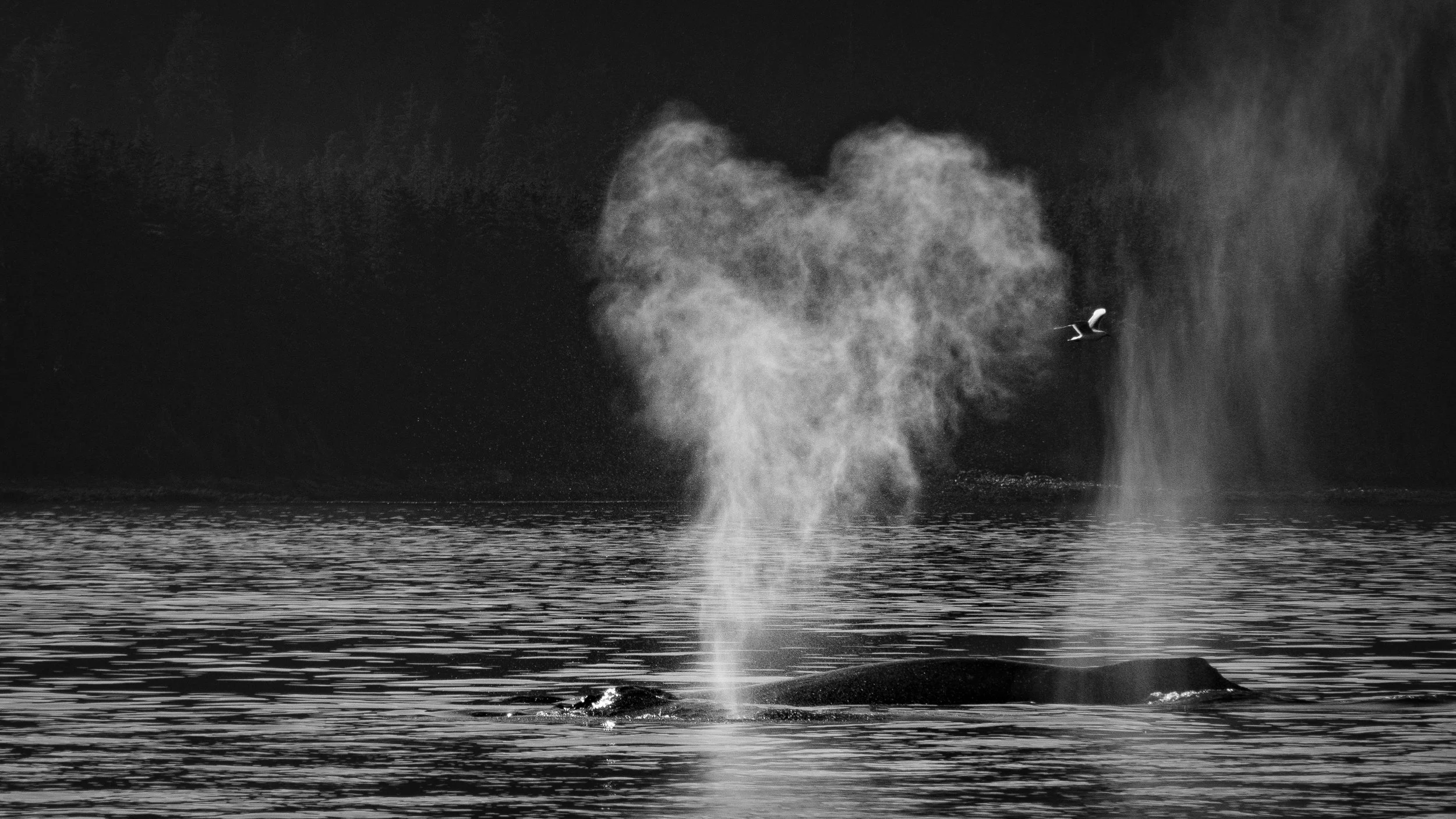
Don’t forget that you can create beautiful images just by photographing the spout! Keep an eye out for high contrast moments, like this photo where the spout is contrasted against the dark trees in the background. This heart-shaped spout was a wonderful unexpected surprise!
After you spot a whale’s spout, it will often glide along the surface of the water taking several breaths before preparing to dive down to feed. This gives you time to set your focus and get your settings locked in.
Just before the whales dives, it will arch its back.
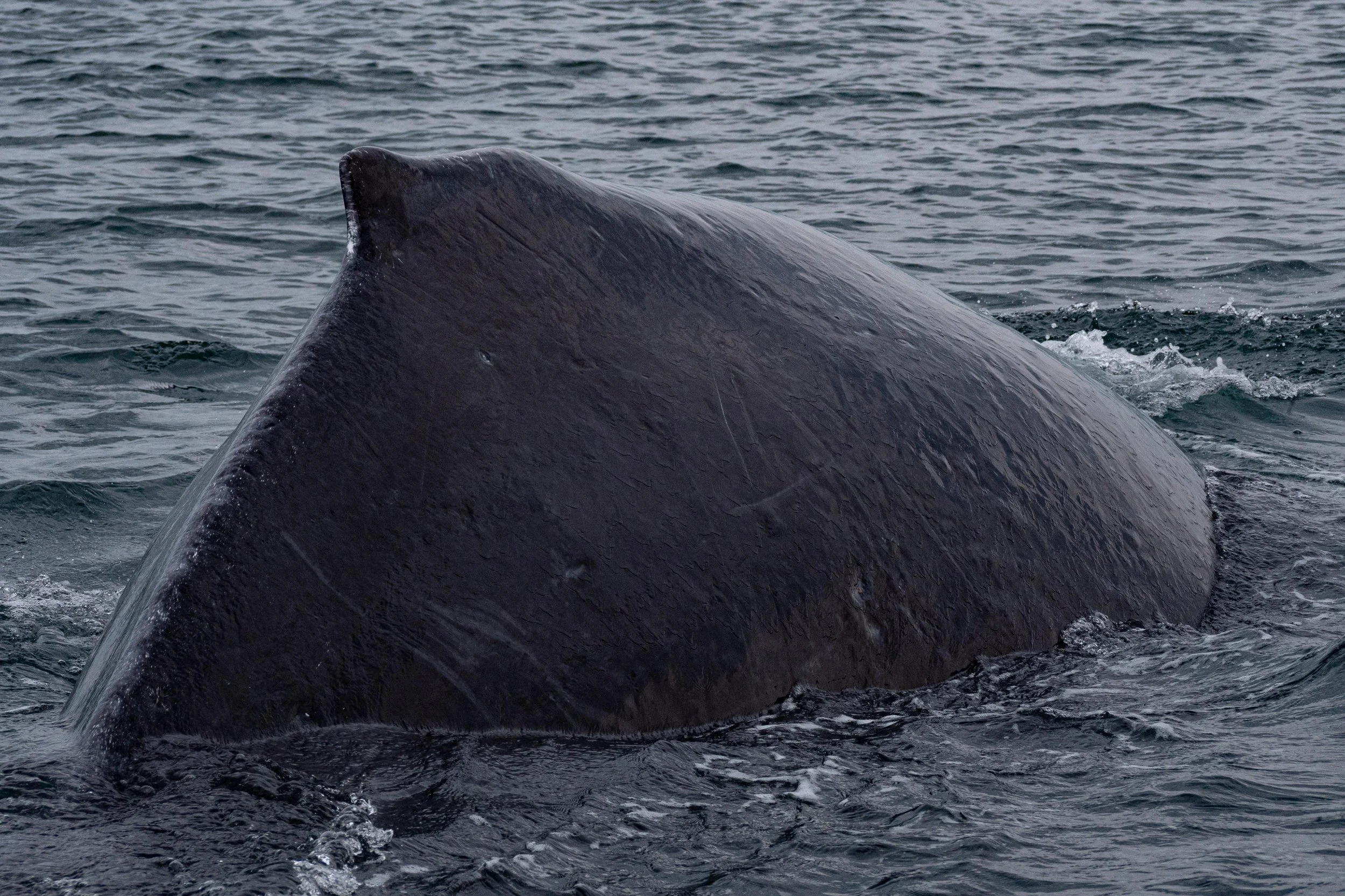
When you see the arch, get ready for the dive! I will start bursting using continuous shooting mode once I see the arch, so I can capture the full sequence of the whale diving down into the water.
After the whale arches its back, it will dive down. This is when you might see the whale’s tail pop out of the water, which is always a fun shot to get. Keep in mind that every whale dives differently, and they won’t always show their tail.
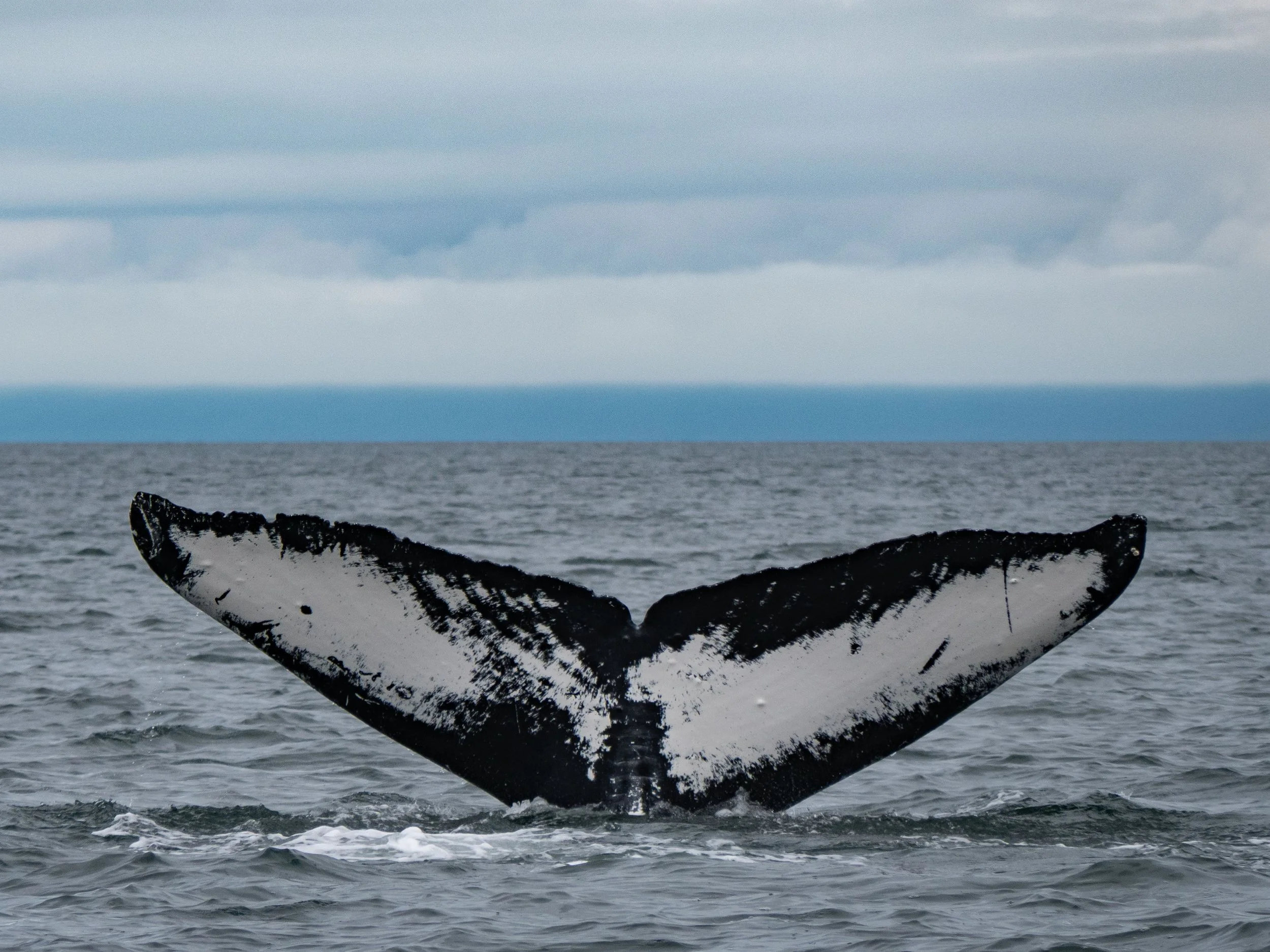
A famous Southeast Alaska whale named Flame diving down to feed. The unique markings and patterns on the tail is how we’re able to identify individual humpback whales.
After the whale dives down, it will be feeding underwater. The length of time a whale feeds for depends on how much food they find and how deep they have to dive to find the food. They could reappear at the surface in 3-4 minutes if their food isn’t too far down, or 10-15 minutes if they are diving deep for their meal. They could reappear in any direction so watch again for those spouts!
Breaching - when a whale jumps out of the water
This is what everyone wants to see, but only a few get to! When I was leading whale watching tours, I was on the water every day, and would only see a whale breach once every couple weeks. For someone on a single whale watch it is not likely you’ll see a whale breach. But you may get lucky! The reason it is rare to see in Southeast Alaska is because breaching doesn’t have a clear purpose, and whales are typically focused on eating. Scientists theorize that breaching could be a form of play, could be to knock barnacles off their blubber, or could be to get another whale’s attention. Although uncommon, it is incredibly exciting to witness!
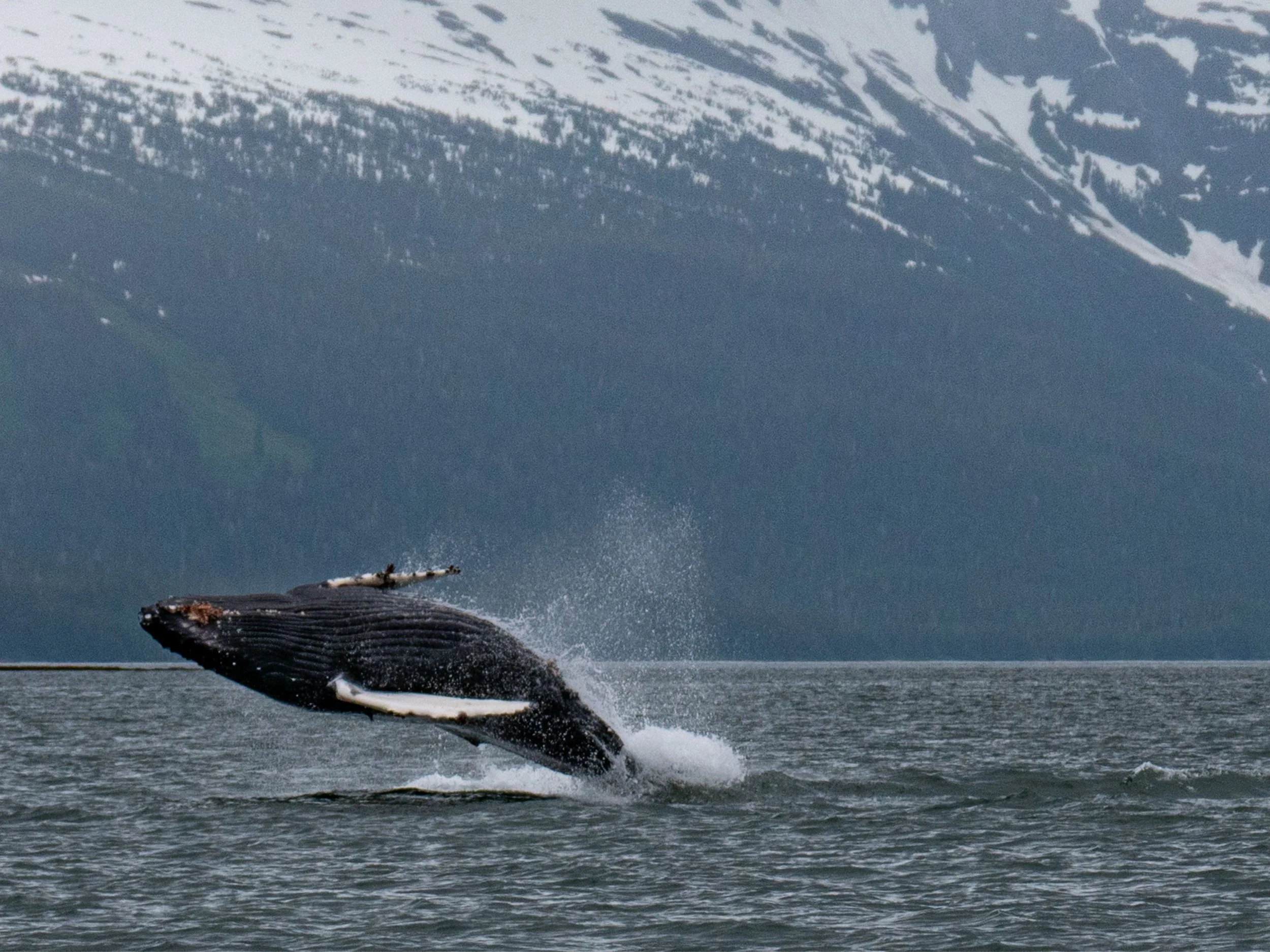
Capturing a breach is special and challenging. This whale started breaching repeatedly which gave me a better chance to capture the split-second moment.
Timing a breach is difficult because it often happens without warning. Unless you happen to have your camera pointed right where it happens, you can’t react in time.
But sometime’s a whale breaches repeatedly.
I’ve found this is more common with younger whales. If you see a young whale with its mother, occasionally it will start breaching and keep going over and over with remarkable consistency. When this happens, I like to set my focus on the last spot that it breached, then wait. This gives me a higher likelihood of getting the shot. Make sure you also have continuous shooting (or burst mode) turned on to increase your odds. Because you don’t know exactly where the whale will appear, I also recommend not zooming in all the way so you can keep a wider area in view.
Don’t forget about video
Once of my favorite ways to capture whales breaching is slow-motion video, as you see in my video above. This whale breached repeatedly, and I turned on my camera’s slow-motion video capture at 180 frames per second, which allowed me to slow down the video by 6x. I was actually using manual focus in this video, so I focused on the last spot the whale breached, started recording, waited, and got the shot.
A lot of folks are also interested in learning about bubble-net feeding, an even rarer behavior. I am going to create a separate blog post all about it, so keep your eyes peeled!
I hope this video helped you learn a bit more about how anticipating whale behavior can help you walk away with great images. If you’re interested in learning more about what settings I like to use, head back to the blog and you’ll find a vide titled Best Camera Settings for Whale Photography.
I wish you a wonderful whale watching experience. These are amazing creatures that I’ll never get tired of seeing.
Want to learn more before your Alaska trip?
Click here to visit our YouTube page.
Click here to download our free One Hour Alaska Photography Prep Guide.
If you have any questions after reading this post, don’t hesitate to leave a comment below or send me an email at michael@capturealaskatours.com.
Michael Bain
Founder | Capture Alaska
